Pneumatic IBC Tote Mixers
LBC-100A (1 HP) and LBC-200A (2 HP). Air-driven, adjustable speed, no electrics.
Air-driven mixers for 275–330 gallon totes
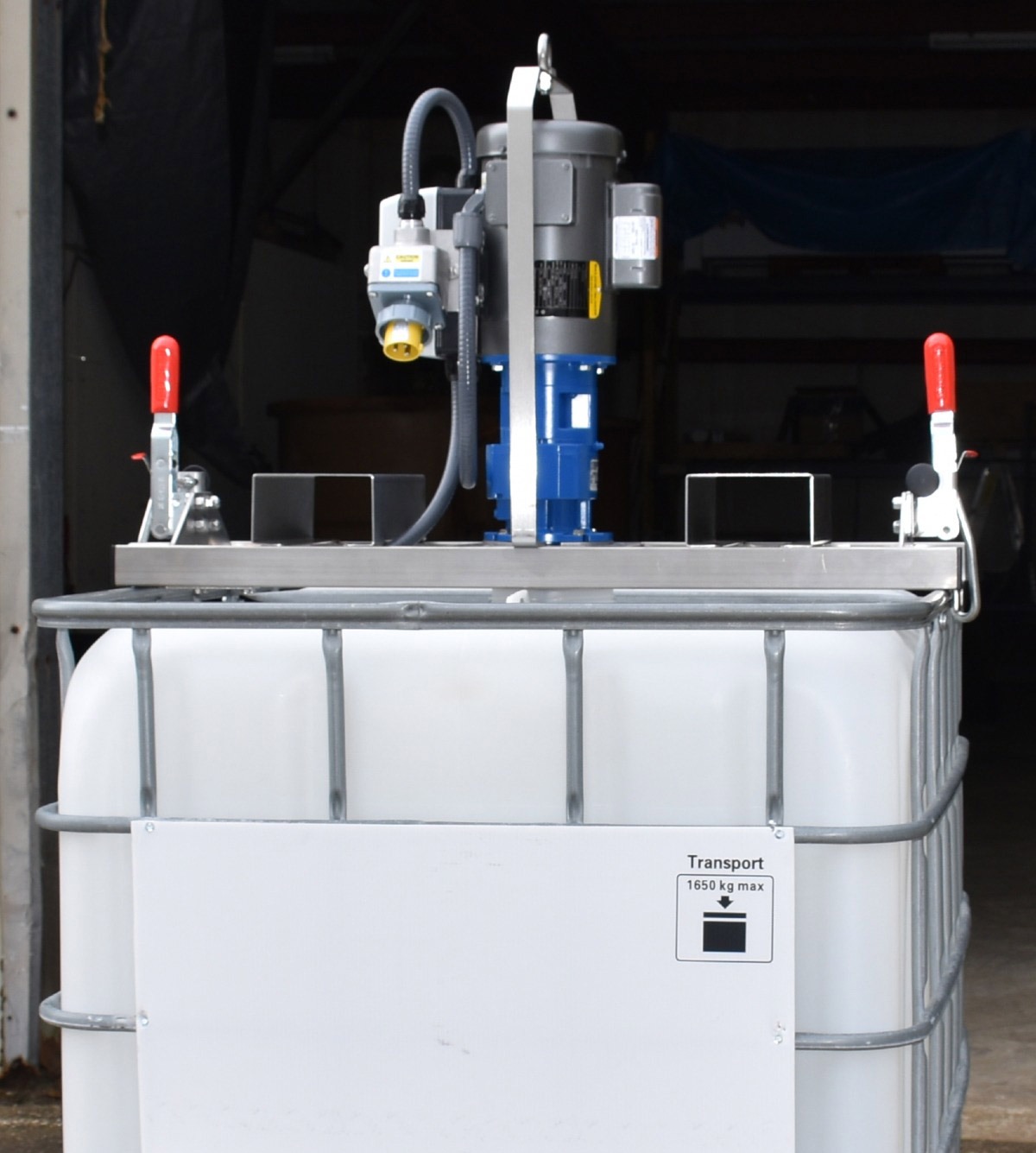
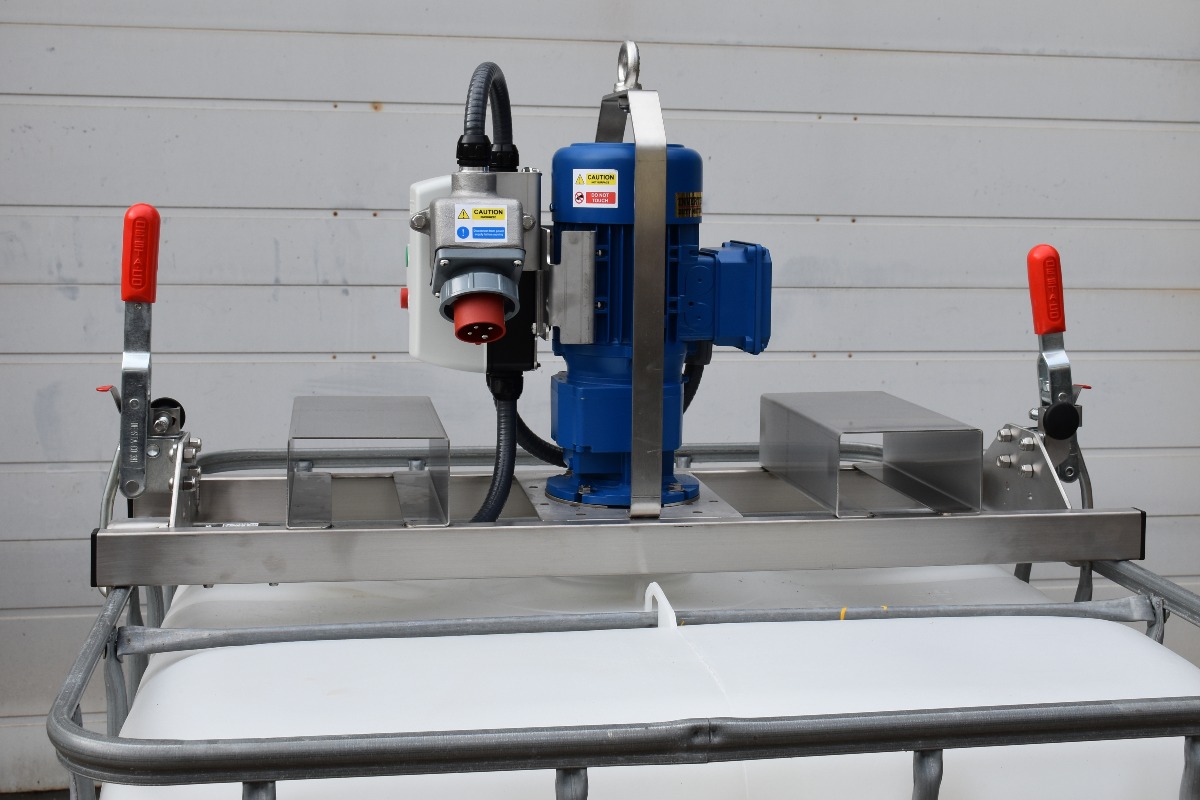
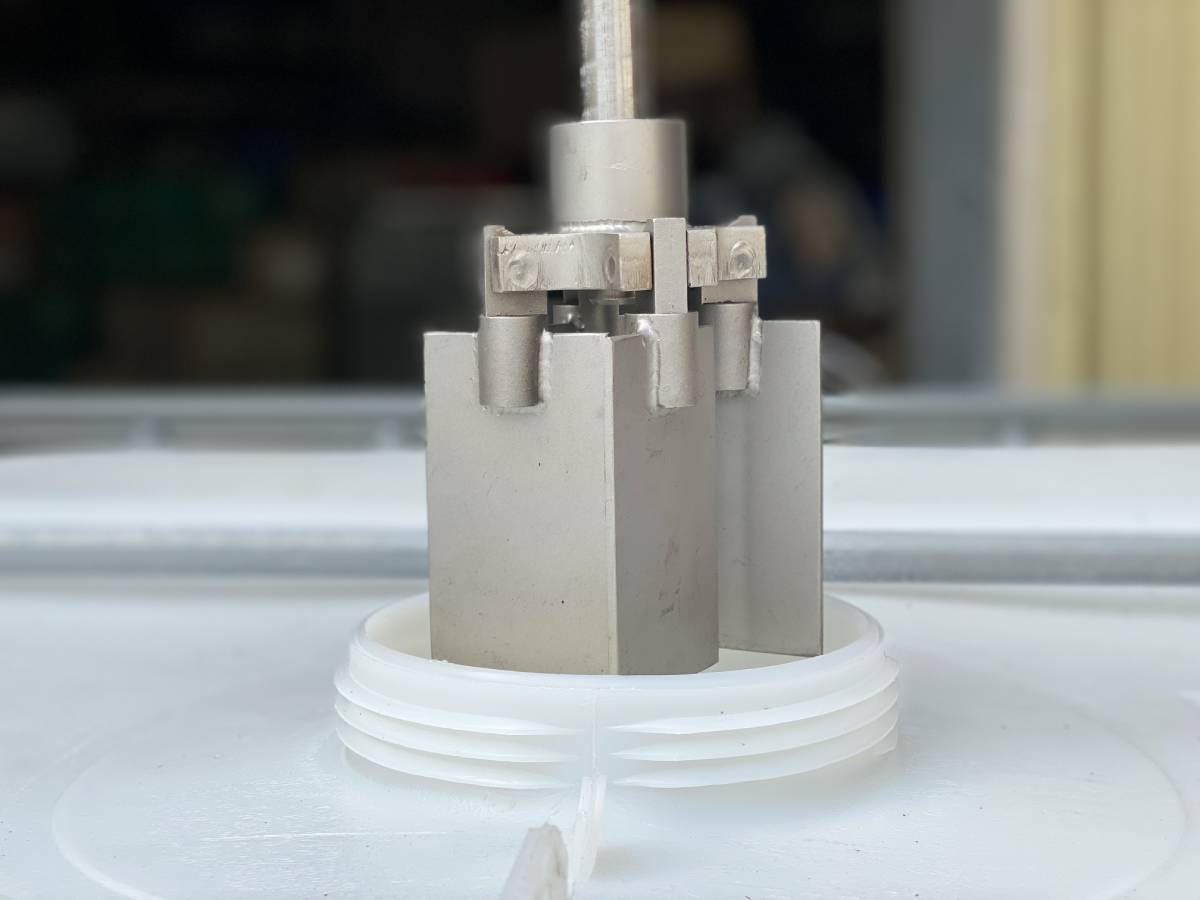
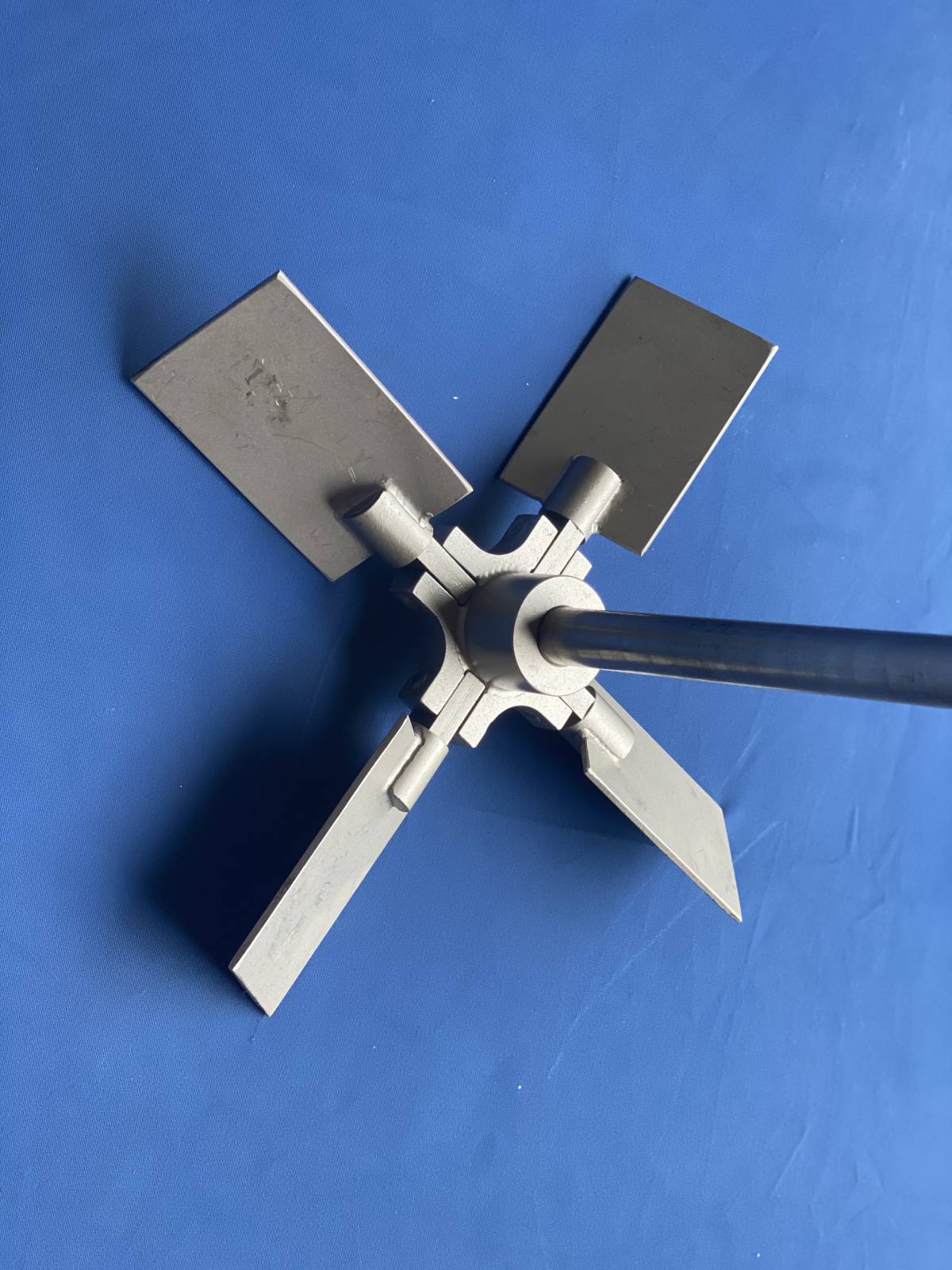
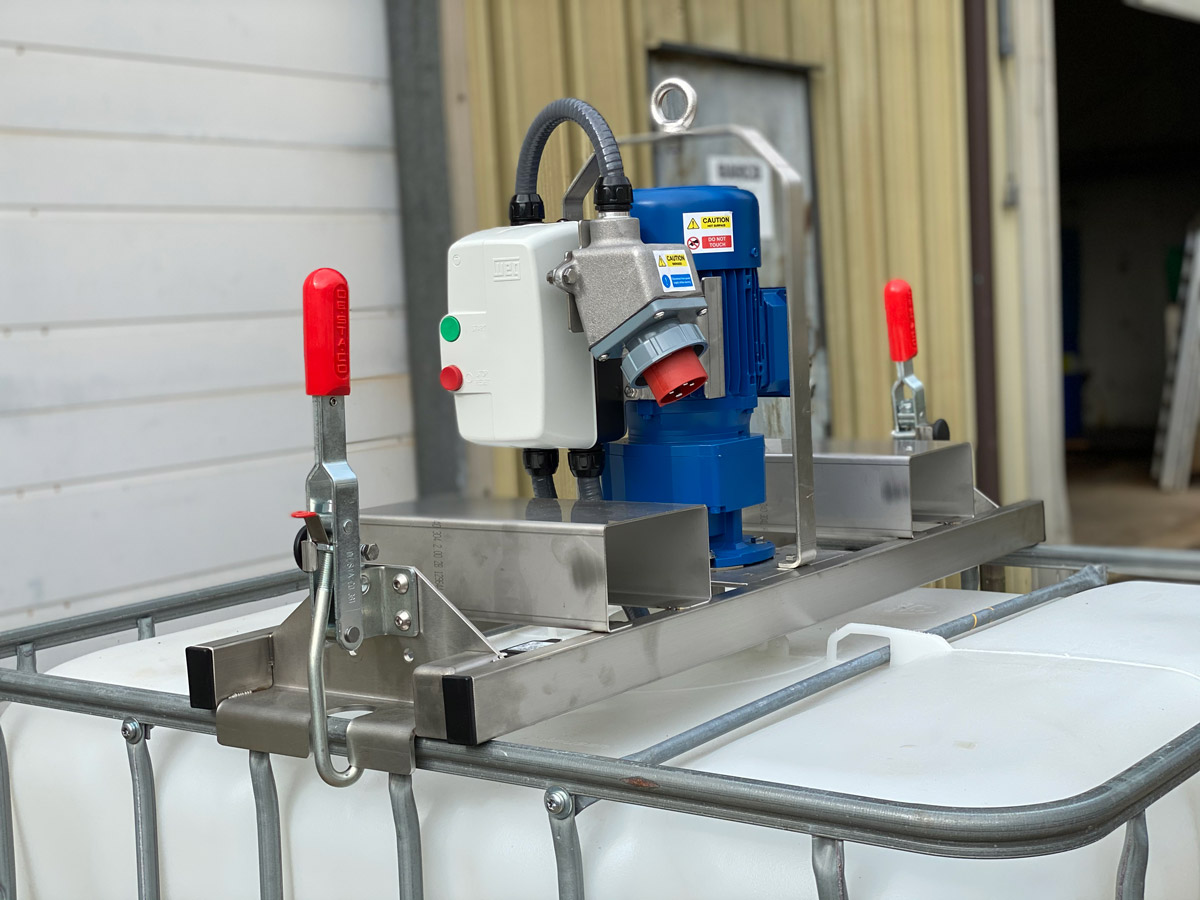
The LBC-100A and LBC-200A are the pneumatic versions of US Mixers’ gear-driven IBC mixers. An air motor replaces the electric motor and starter; everything else — the stainless bridge, toggle clamps, forklift pockets, lifting strap, safety interlock and E-400 folding impeller — is the same.
Speed is set with the supplied flow-control valve, so you get adjustable speed as standard without a variable-frequency drive. An exhaust muffler is fitted; a high-efficiency silencer is available as an option. Air mixers are also lighter: 71 lb and 90 lb against 94 lb and 115 lb for the electric equivalents.
Included on every pneumatic model
- Air motor with flow-control valve for speed regulation
- Exhaust muffler (high-efficiency silencer optional)
- Inline helical gearbox, sealed for life, FDA H1 food-grade lubricant
- Safety interlock — will not run unless mounted on a tote
- Standard bridge: toggle clamps, forklift pockets, lifting strap, 316 SS wetted parts
Standard air mixers are designed for indoor use in a safe area. If the mixer will operate in a classified hazardous zone, tell us and we will advise.

LBC-100A vs LBC-200A
| LBC-100A | LBC-200A | |
|---|---|---|
| Power | 1 HP / 0.75 kW | 2 HP / 1.5 kW |
| Drive | Gear drive, air motor | Gear drive, air motor |
| Output speed | Adjustable, max 235 RPM | Adjustable, max 235 RPM |
| Impeller | 12" E-400 folding, 4 blade | 13" E-400 folding, 4 blade |
| Shaft | 3/4" (19.05 mm) 316 SS | 3/4" (19.05 mm) 316 SS |
| Weight (approx.) | 71 lb | 90 lb |
| Typical viscosity range | Up to ~5,000 cP | ~5,000 – 15,000 cP |
| Speed control | Flow-control valve (standard) | Flow-control valve (standard) |
LBC-100A — 1 HP pneumatic IBC mixer
The LBC-100A handles the same duties as the electric LBC-100 — water-treatment chemicals, paints, inks, solvents and dilute chemicals up to roughly 5,000 cP — with the added benefit of speed adjustment on the valve. At 71 lb it is the lightest mixer in the range.
LBC-200A — 2 HP pneumatic IBC mixer
The LBC-200A pairs a 2 HP air motor with the 13″ impeller for heavier coatings, adhesives, slurries and gels from about 5,000 to 15,000 cP. Above 4,000 cP it is normally supplied with dual impellers.
Air supply requirements
- Clean, dry, lubricated compressed air
- Speed regulated by the supplied flow-control valve
- Exhaust muffler fitted; high-efficiency silencer available
Estimated air consumption and operating-pressure curves for each model are given in the air-drive IBC mixer datasheet — request a copy.
Options for pneumatic mixers
- High-efficiency silencer
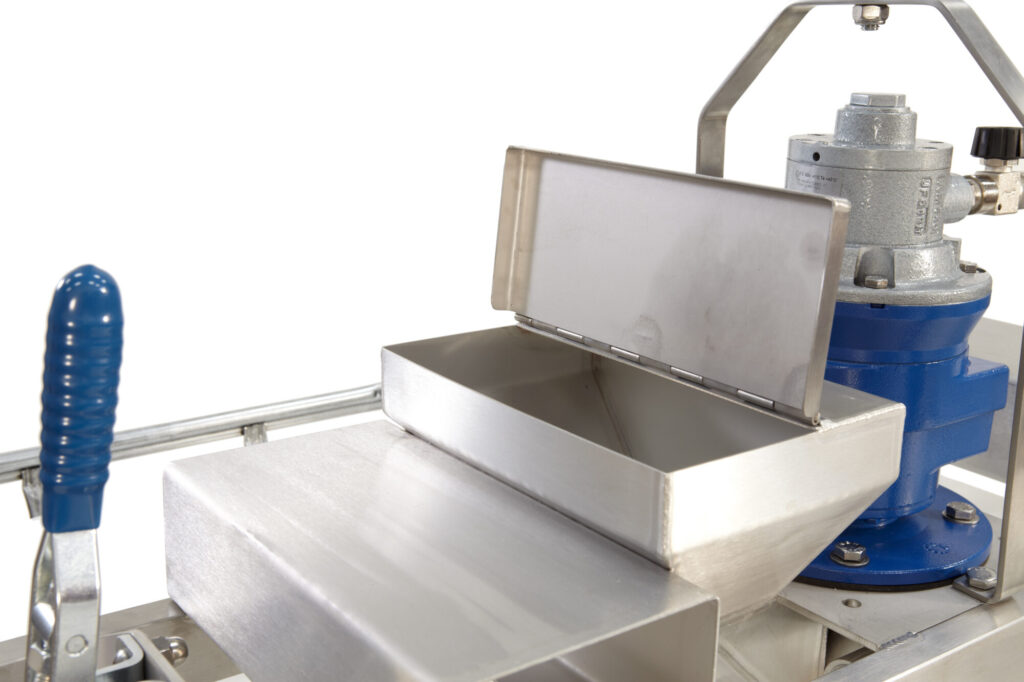
- Powder hopper and/or two 1" liquid inlet connections on the bridge
- Dual E-400 impellers (standard above 4,000 cP) or low-level radial impeller with long shaft
- Polypropylene or PVDF shaft and impeller for corrosive products
- Polished / electroplated wetted parts for food and pharmaceutical duties
Pneumatic or electric?
Choose pneumatic when compressed air is your plant standard, you want to adjust speed without buying a VFD, or you prefer to keep electrical equipment away from the product. Choose electric when a suitable outlet is at hand and you want fixed-speed, plug-and-play operation. Same bridge, same impeller, same options either way.
Frequently asked questions
Is the speed adjustable?
Yes. Every pneumatic model is supplied with a flow-control valve; speed is adjustable up to a maximum of 235 RPM.
What air quality does it need?
A clean, dry, lubricated supply. A standard filter-regulator-lubricator at the point of use is the usual arrangement.
Is it suitable for hazardous areas?
Standard units are designed for safe-area indoor use. Air motors have no electrical components, but the complete assembly should still be reviewed for your zone — tell us the classification and we will advise.
How noisy is it?
An exhaust muffler is fitted as standard. If the mixer will run in an occupied area, specify the high-efficiency silencer option.
For a quote, tell us the product, its viscosity and specific gravity, the tote size, whether you need electric or air, and the mixing objective. Our engineers will recommend the right model and impeller arrangement.